Stories from the soil.
Reflections, experiments, and growing wisdom from the garden gate.
Seed & Soul is where we think out loud. About growing food, tending land, building community, and the surprising things that happen when you put your hands in the dirt and pay attention.
Pull up a chair. Stay a while.
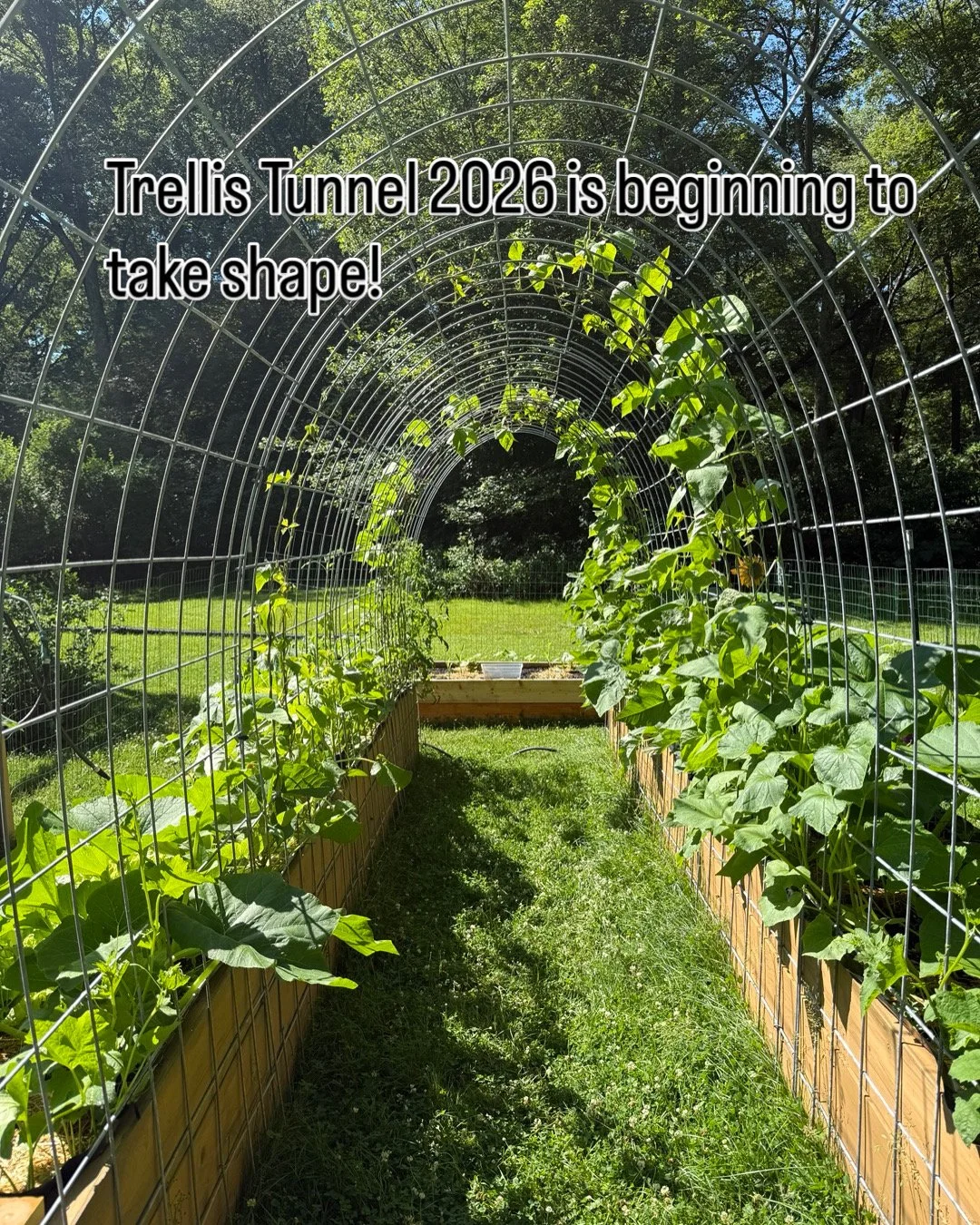
How We Built the Cattle Panel Trellis (And What We've Learned So Far)
Since 2020, my garden has grown a little more each year. This season I finally built the cattle panel trellis I'd been dreaming about — and I'm documenting every stage, including the parts that haven't gone to plan.
One of the greatest joys in my life is growing food and sharing it with the people around me. Dropping a bag of garden goodies on a neighbor's porch unexpected and unannounced never fails to make both of us feel good. Since 2020, my garden has grown a little more each year, mostly so I can multiply these moments.
This year I finally did something I'd been thinking about for a while: I built a cattle panel trellis.
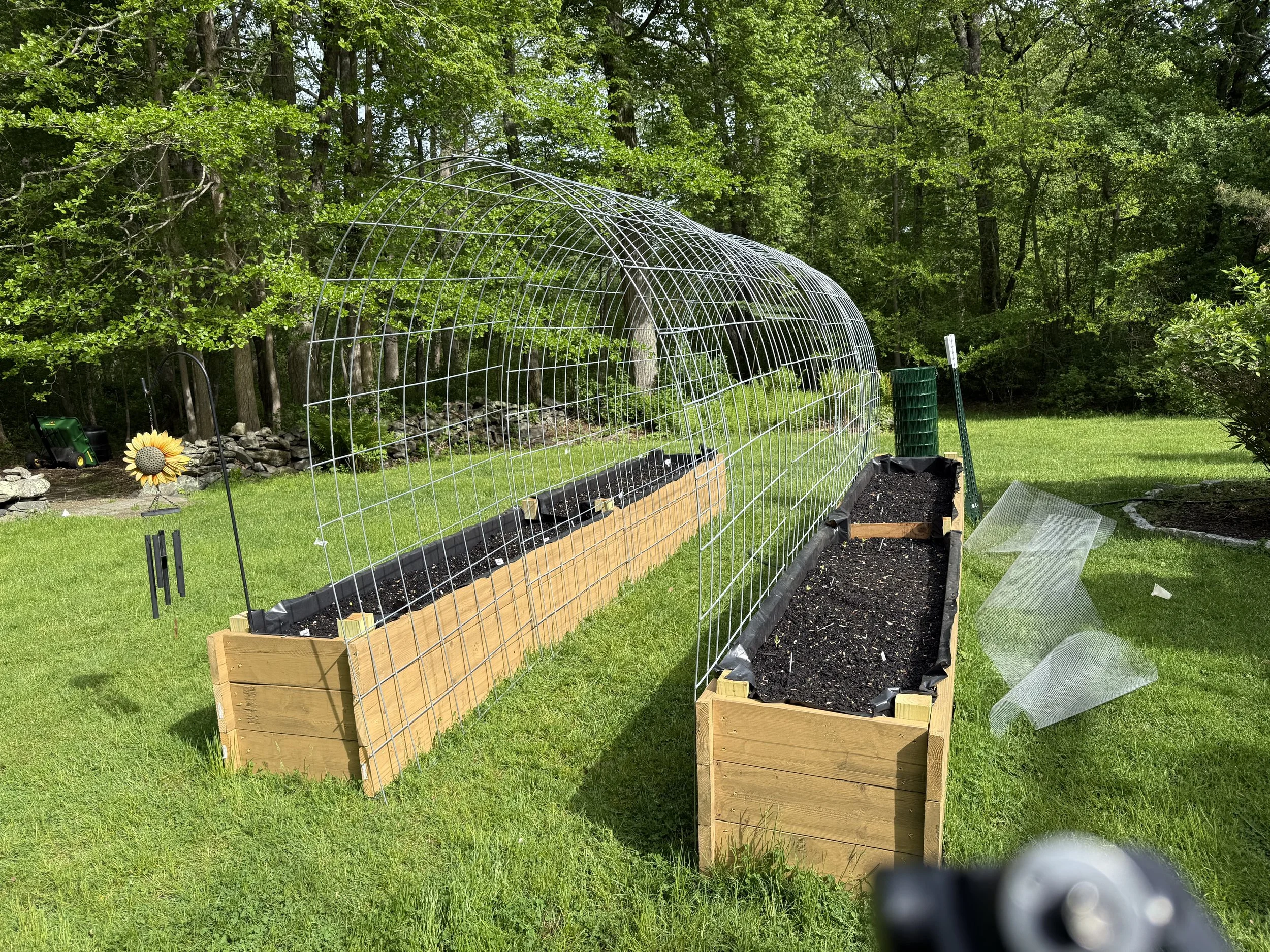
Day one. Empty beds, ready for seeding. ☀️
Why Vertical?
I have limited space and I want to grow more. It's as simple as that.
But there's something else, too. For the past eight years I've had a persistent feeling that we're going to need to grow our own food and share it with our communities. I can't fully explain it. But it sits with me, and it shows up in how I garden.
So this season I decided to stop thinking about vertical growing and start doing it. A cattle panel trellis felt like the right prototype: sturdy, scalable, and a good test of which crops could become signature producers on a larger farm someday.
I'm also thinking carefully about soil. I grow as organically as I can, leaning on vermicompost from my worm farms, traditional compost from yard clippings, and food grounds from my Mill Food Recycler — which turns kitchen scraps into a fine, dry material I add directly to the beds. Combined with premium raised bed soil from Earth Care Farm, these beds started with something alive underneath them. (I LOVE these two products so am sharing the links).
Building It: Easier Than Expected (Mostly)
I watched a lot of YouTube videos before picking up a single tool. Cattle panel trellises looked straightforward — and they are — but there are a few things nobody tells you upfront.
The hardest part wasn't the building. It was getting the panels home.
Cattle panels are full-sized. As in, won't-fit-in-your-car-or-your- husband's-truck full-sized. I ended up renting a U-Haul from Tractor Supply just to transport them — which felt a little absurd and also completely on-brand for this whole project.
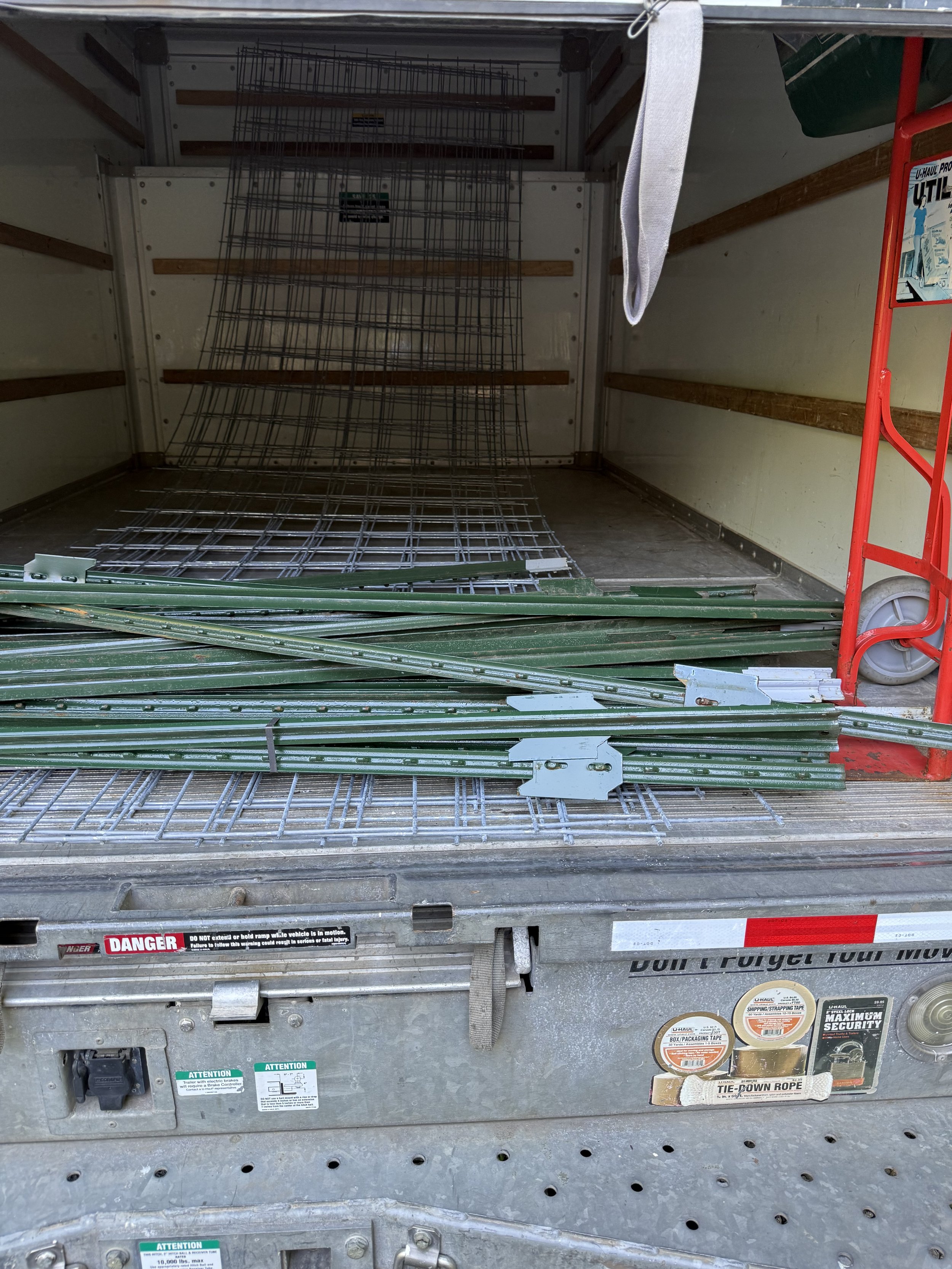
The cattle panels required a U-Haul. Worth it.
The second hardest part was motivating my husband Chuck. But once he was out there with his drill and his straw hat, he was all in.
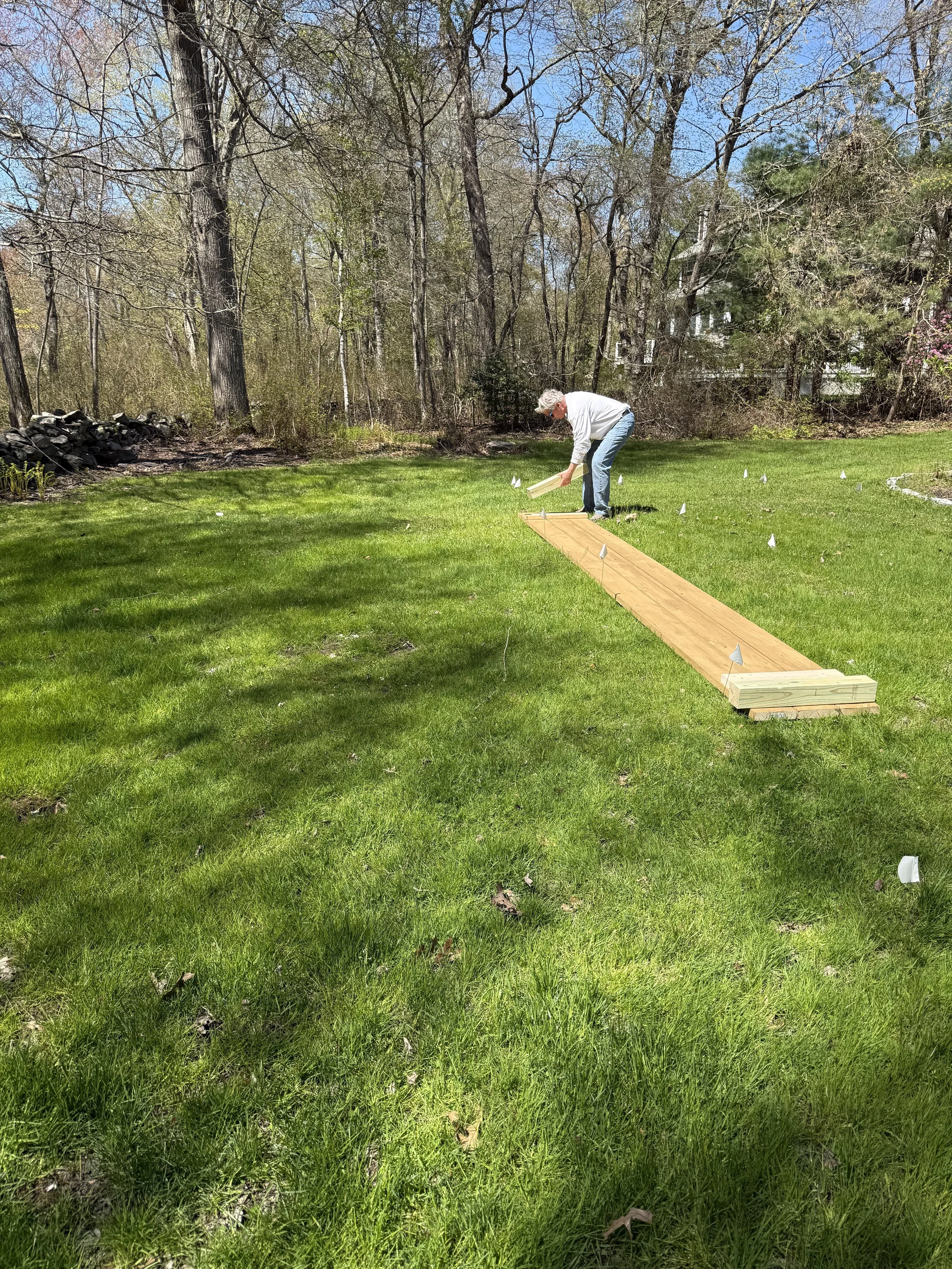
Twenty feet. Every inch of it.
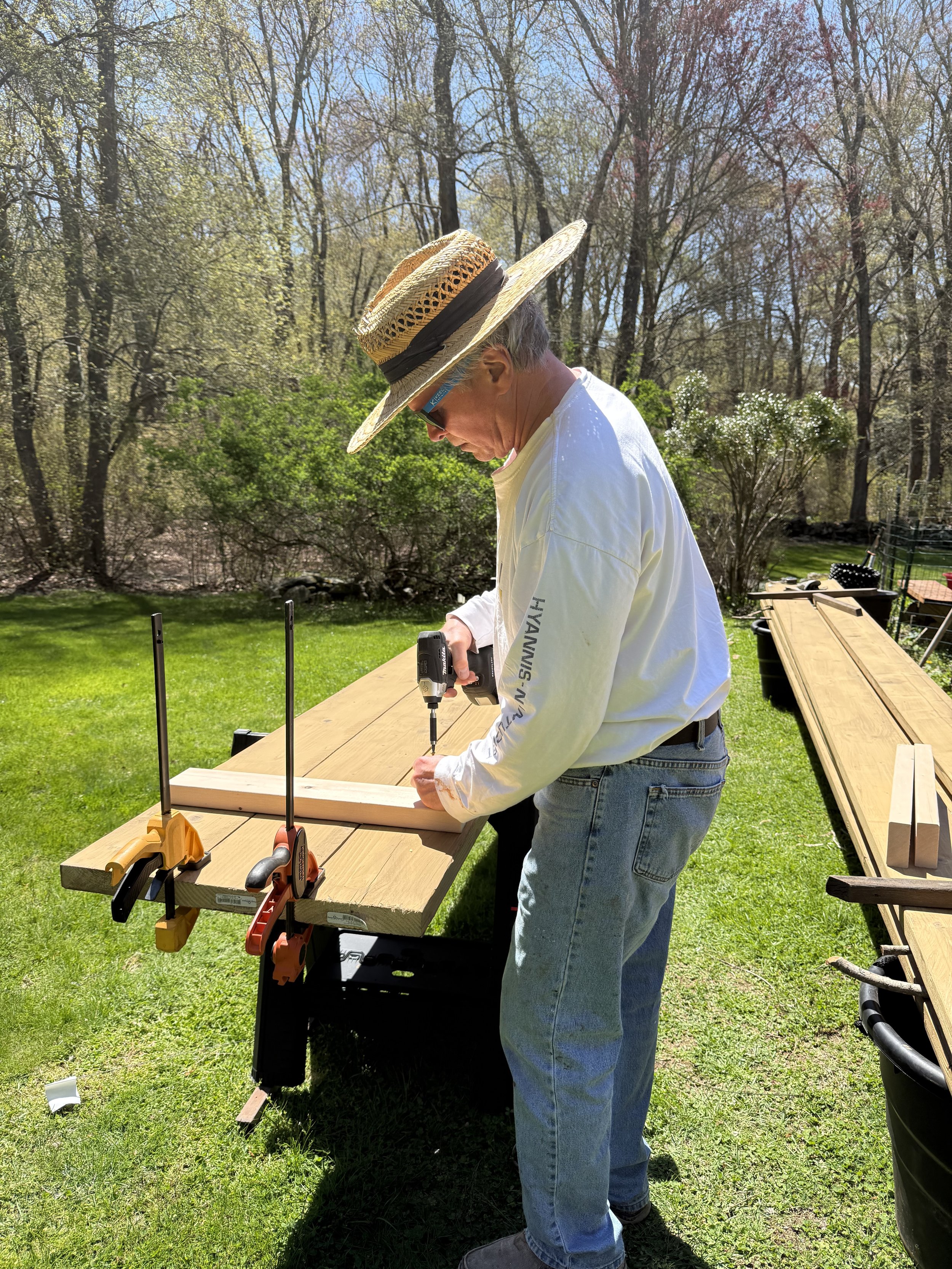
Chuck building the raised beds. Straw hat mandatory.
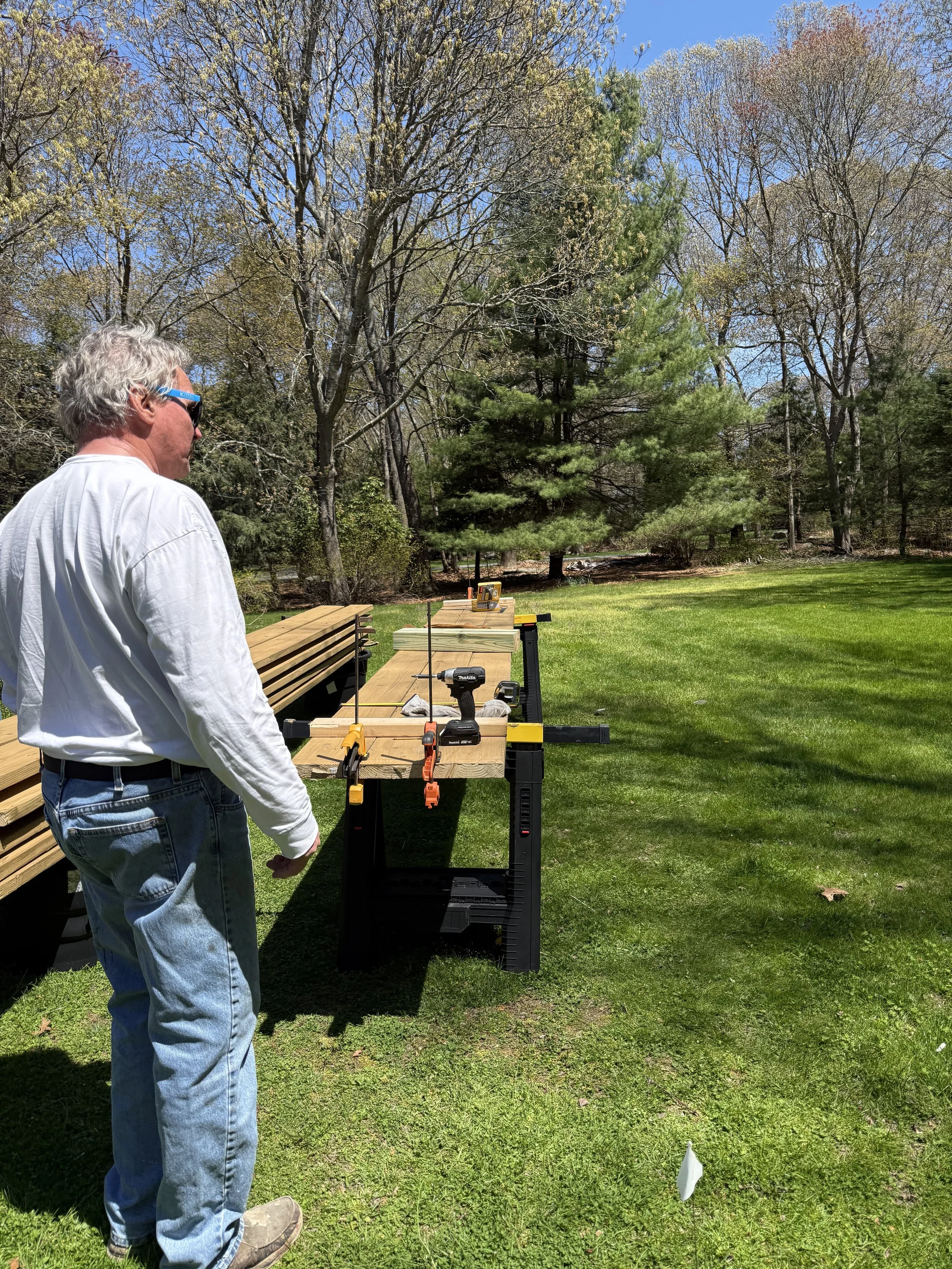
Taking stock before the next cut.
The raised beds went up first — two long cedar boxes, lined and ready.
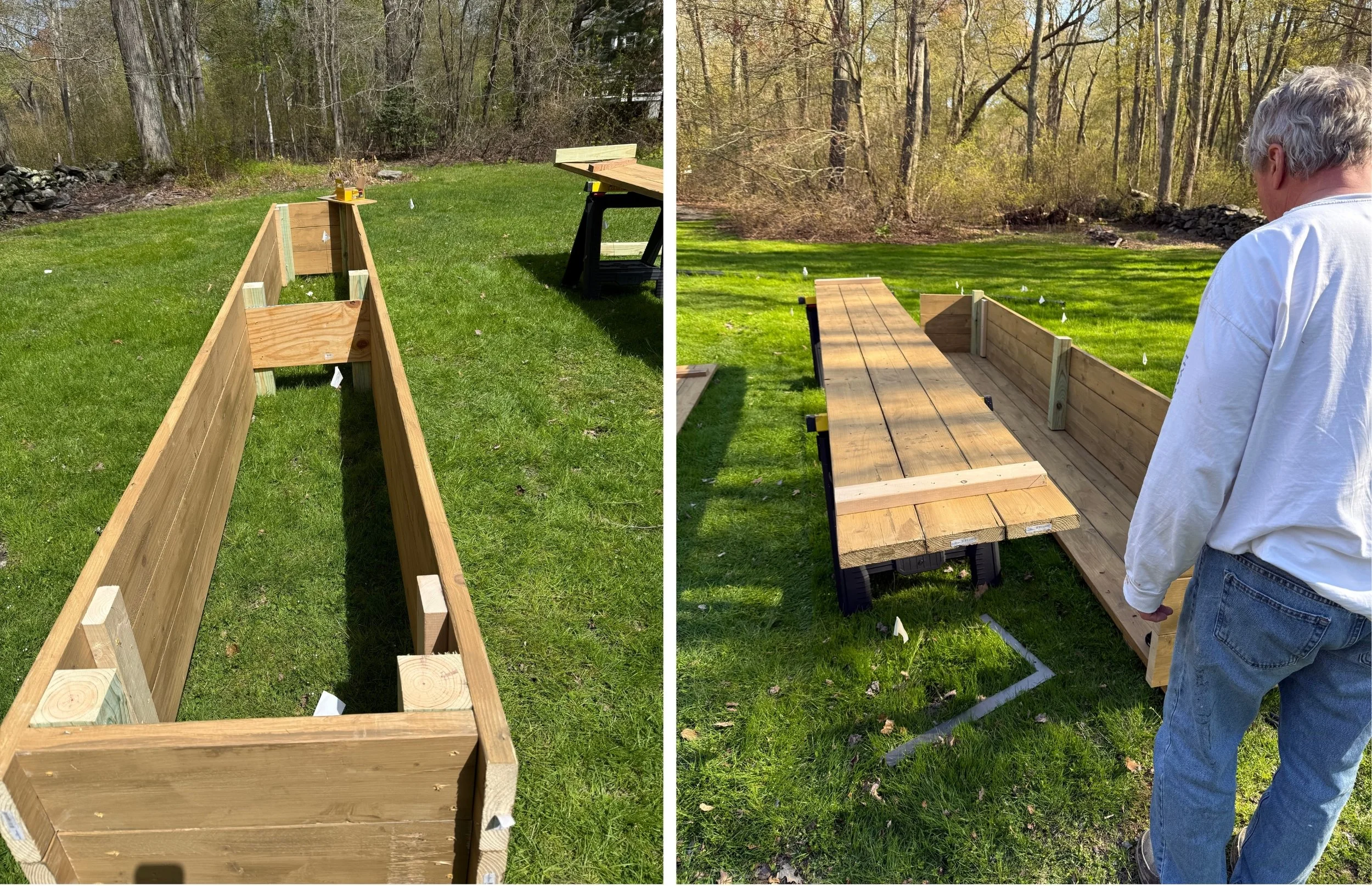
Before the soil. Before the seeds. The beginning.
Twenty feet of possibility.
Then the cattle panels went in, bent into their arch, and suddenly it looked like something.
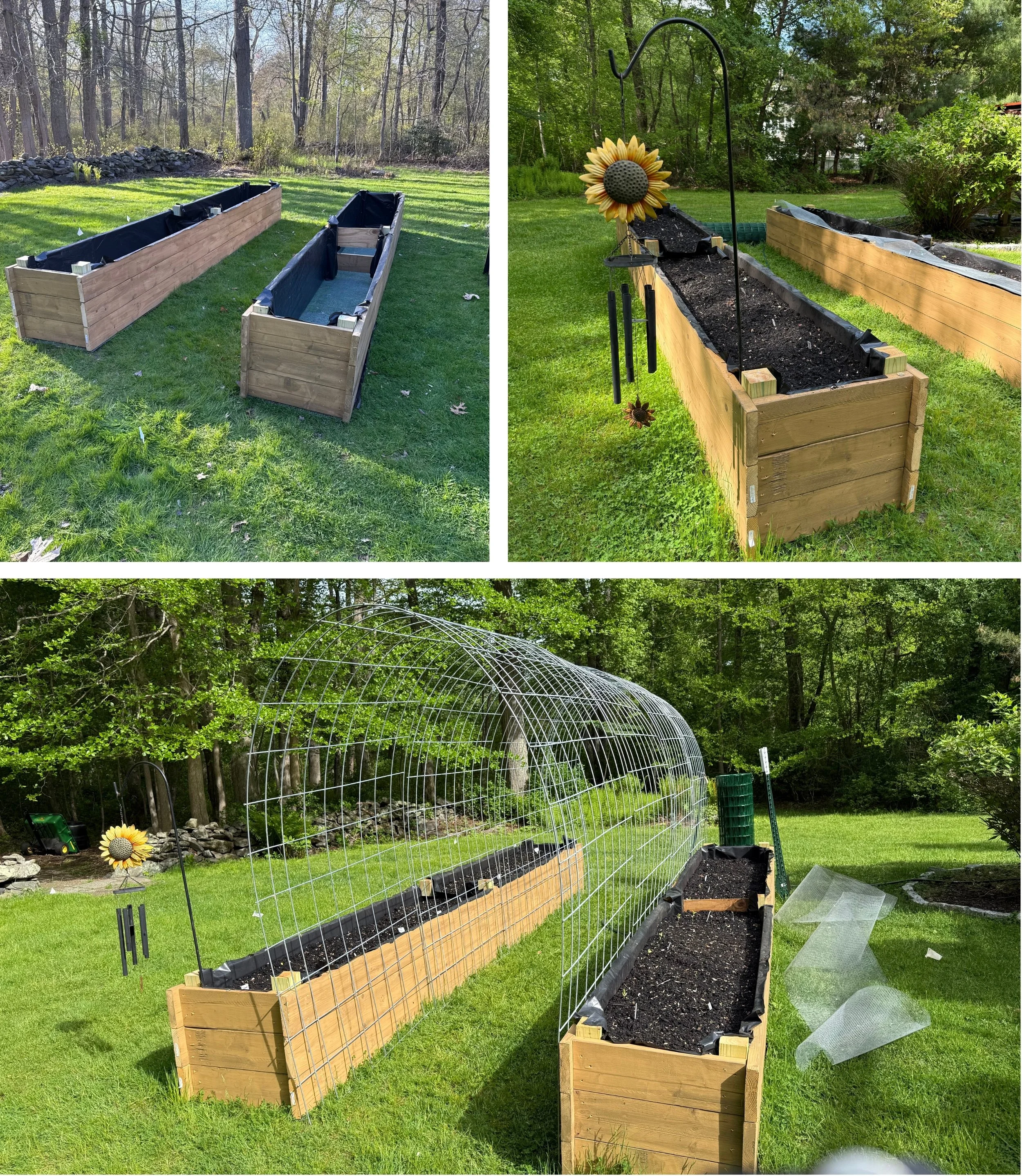
Filled. Ready. Waiting for seeds to grow.
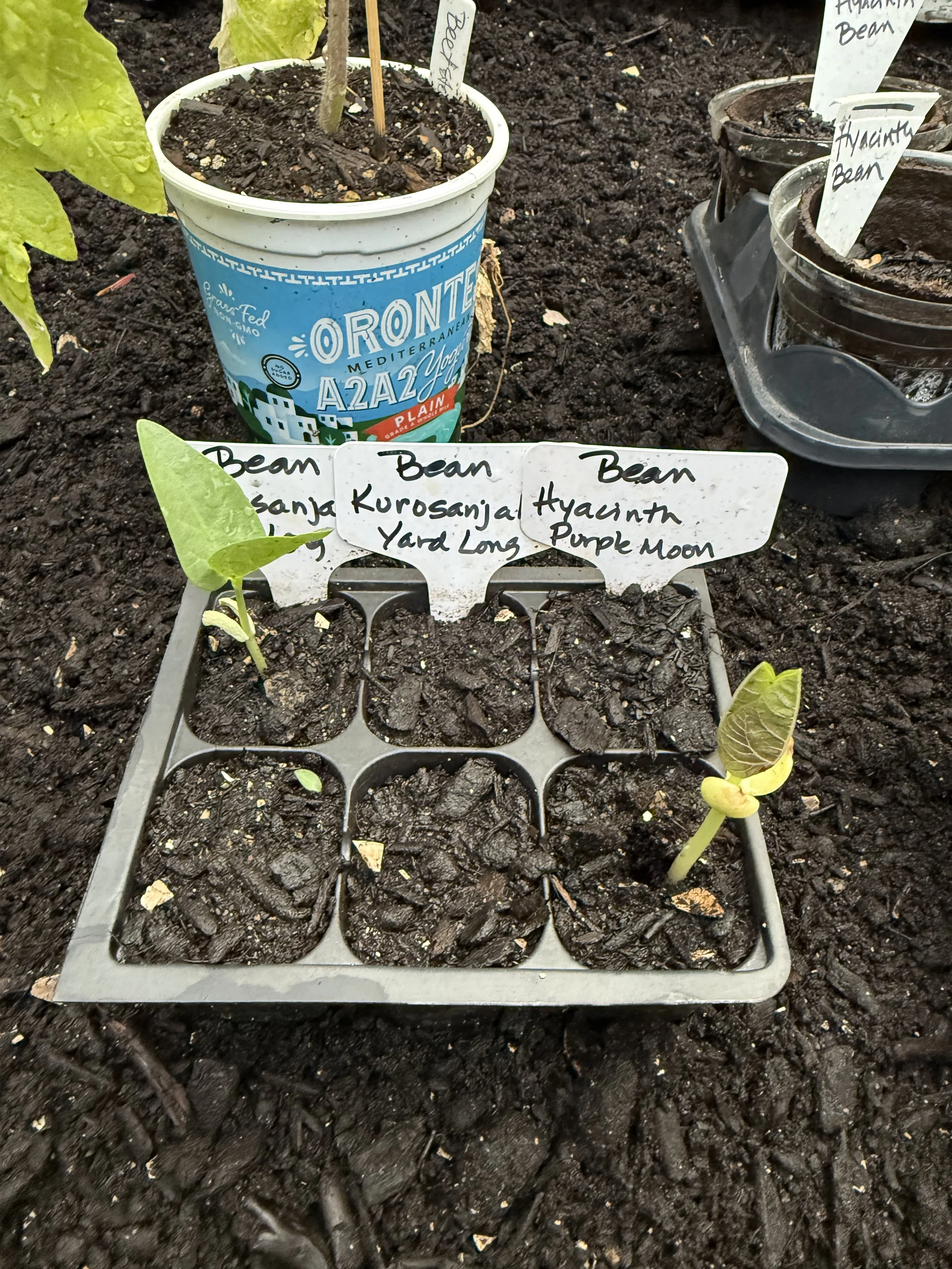
I chose to direct sow most of my seeds rather than transplant seedlings, partly because I had premium soil to work with and partly because I just love watching things come up from nothing. Checking on the beds each morning became the best part of my day.
Watching It Grow
The trellis went through its stages quickly once the plants took hold.
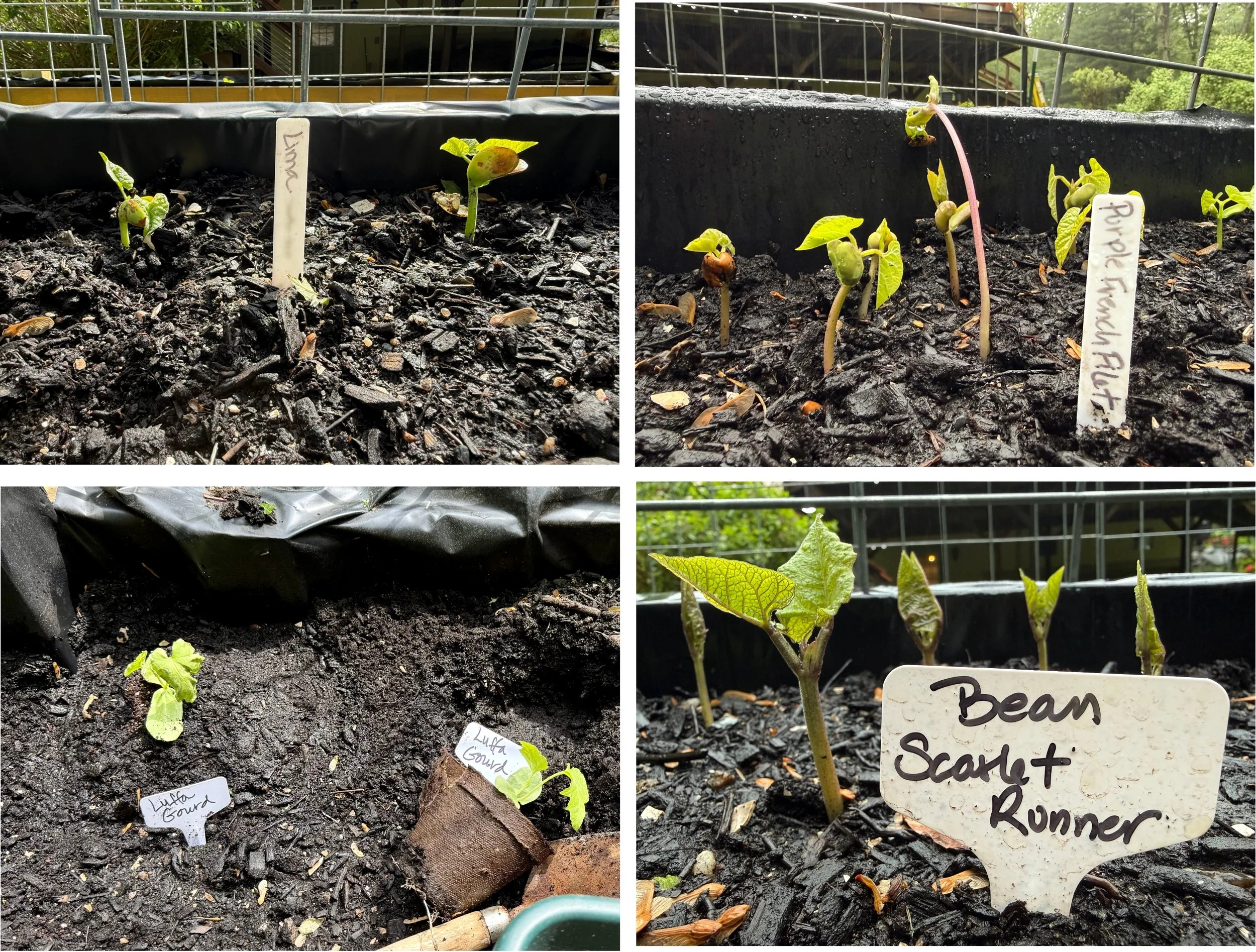
Some seedlings breaking ground.
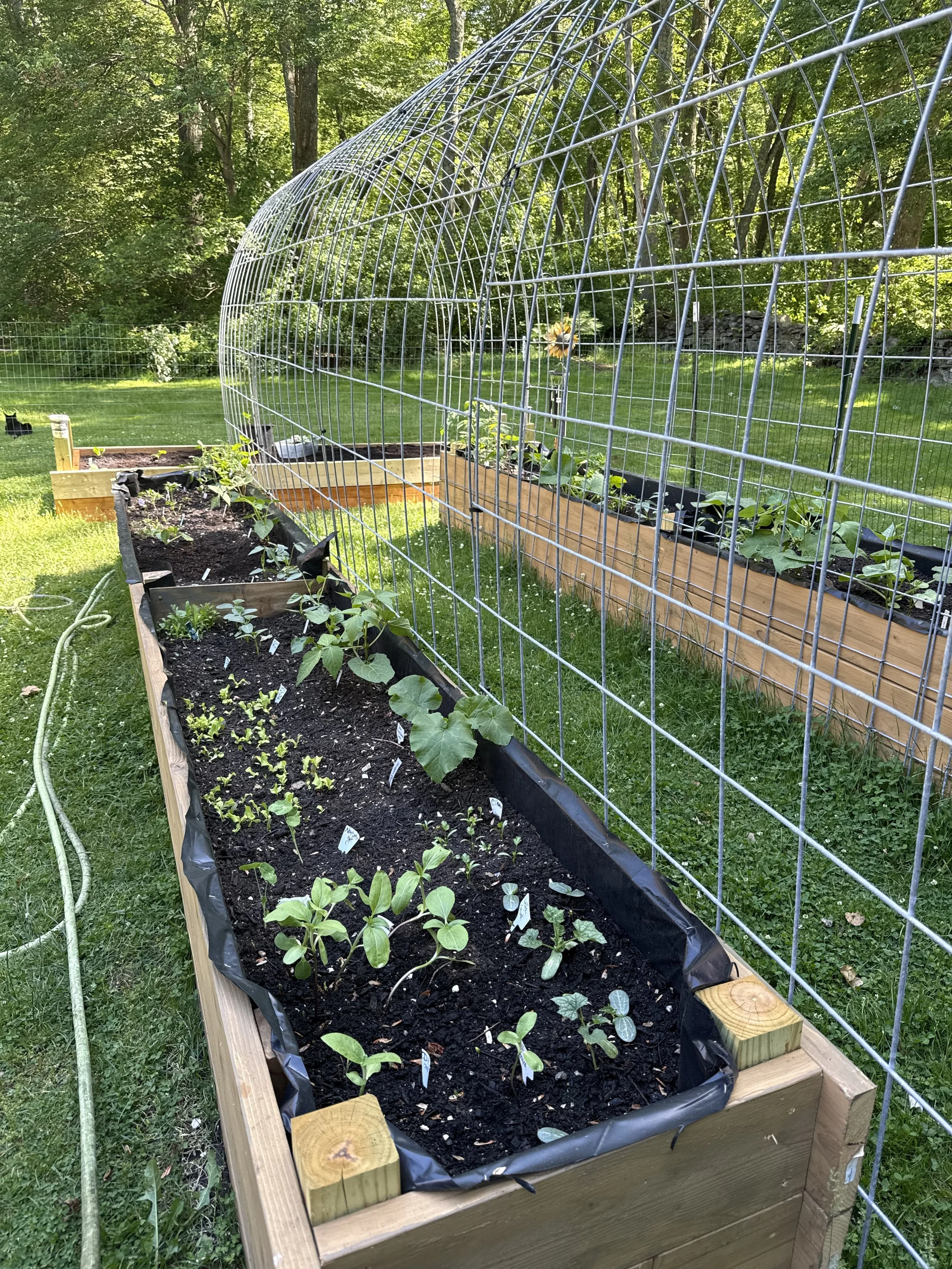
First signs of life. My favorite morning.
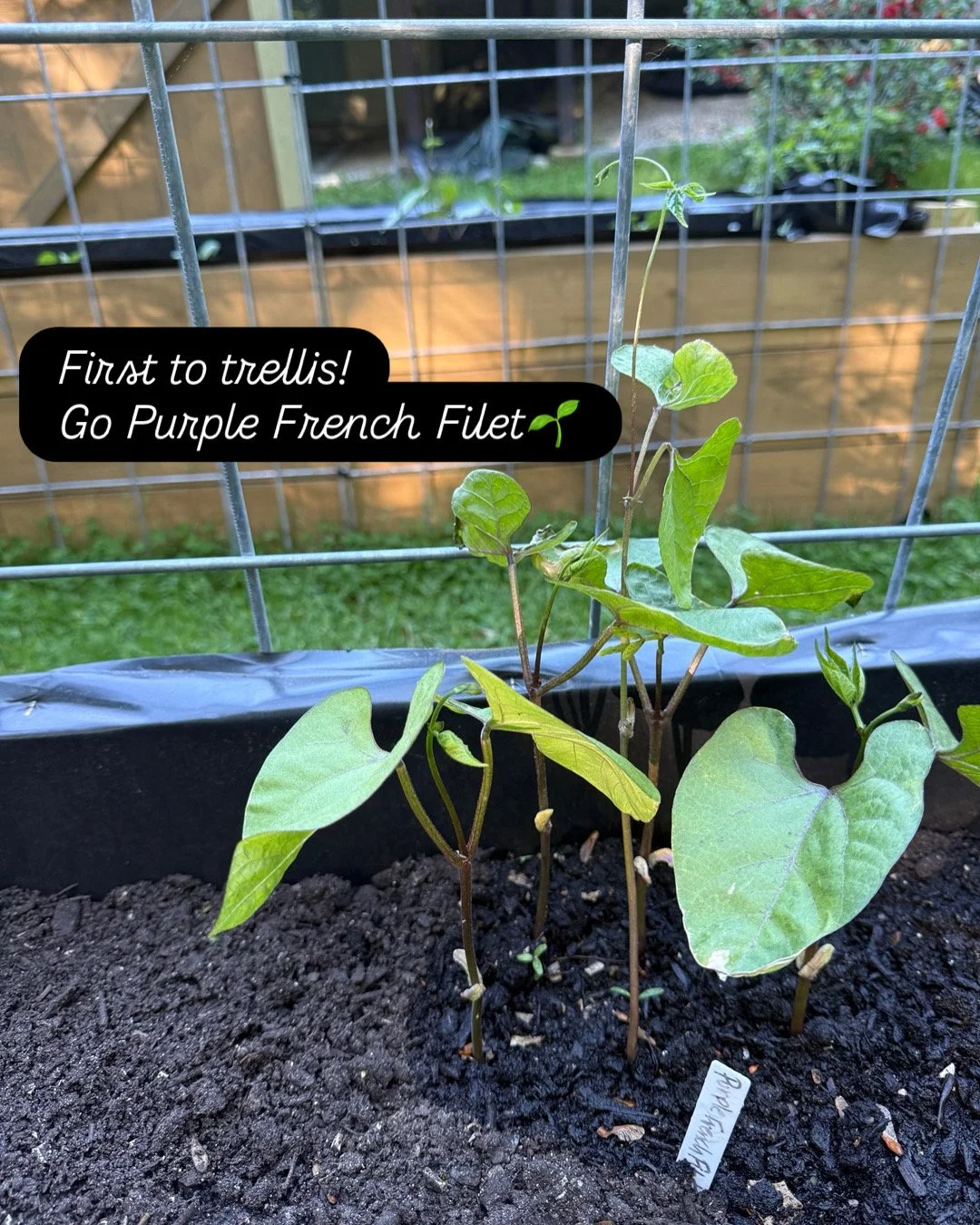
A very proud moment!
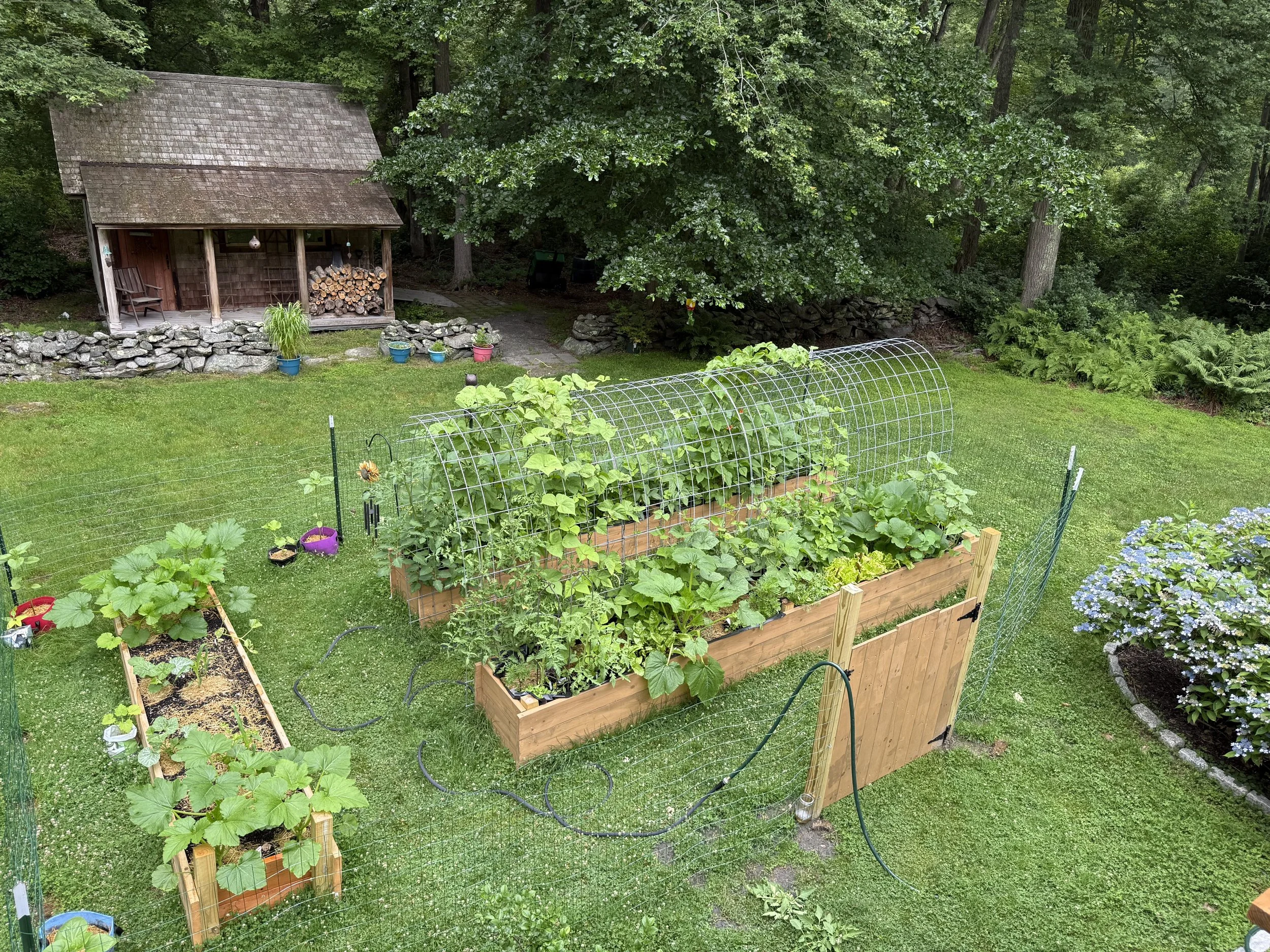
Trellis Tunnel 2026 beginning to take shape!
Where Things Stand: July 26, 2026
Honestly? Mixed results — and I'm choosing to say that out loud because this whole project is about learning in public.
I thought I'd have more vegetables by now. But I've also chosen crops that take their time. Cannellini beans, luffa, and pumpkin all have to fully ripen or go to seed before you harvest them — they're not going to rush for anyone. I knew this going in, but knowing it and waiting for it are two different things.
What I have harvested so far: Sun Gold cherry tomatoes, Blue Lake green beans, and Purple French Filet beans. The harvest basket has been colorful, if not overwhelming.
The Honey Nut squash are vining delightfully — they seem genuinely happy. The cucumbers are just getting started. And the luffas remain a mystery to me, which I find both humbling and fascinating.
One thing I'd do differently: the location.
The trellis gets about 7–8 hours of sun a day, which sounds like a lot until you're growing crops that want full sun all day. The squash don't seem to mind. But certain bean varieties are struggling, and I think they'd be thriving somewhere sunnier. Next season, we move the trellis — or find a sunnier spot for the beans.
What I'm Taking Away
This trellis taught me more in one season than I could have learned from a dozen more YouTube videos. Here's the short list:
🚛 Rent the U-Haul. You can't car-carry cattle panels. Just accept it.
🌱 Direct sow in good soil. When the soil is alive and fed, seeds want to grow. Trust the process.
☀️ Sun matters more than you think. Seven hours isn't eight. Eight isn't full sun all day. Know your site before you plant.
🎯 Choose your crops intentionally. Some of my best producers (squash, cucumbers) are climbing beautifully. Some of my more experimental varieties needed more sun than I gave them.
🪱 Feed the soil, not just the plants. Vermicompost, compost, and Mill grounds have made these beds noticeably richer than anything I've grown in before.
And finally: patience. The luffas are still out there, doing their mysterious thing. I'll report back.
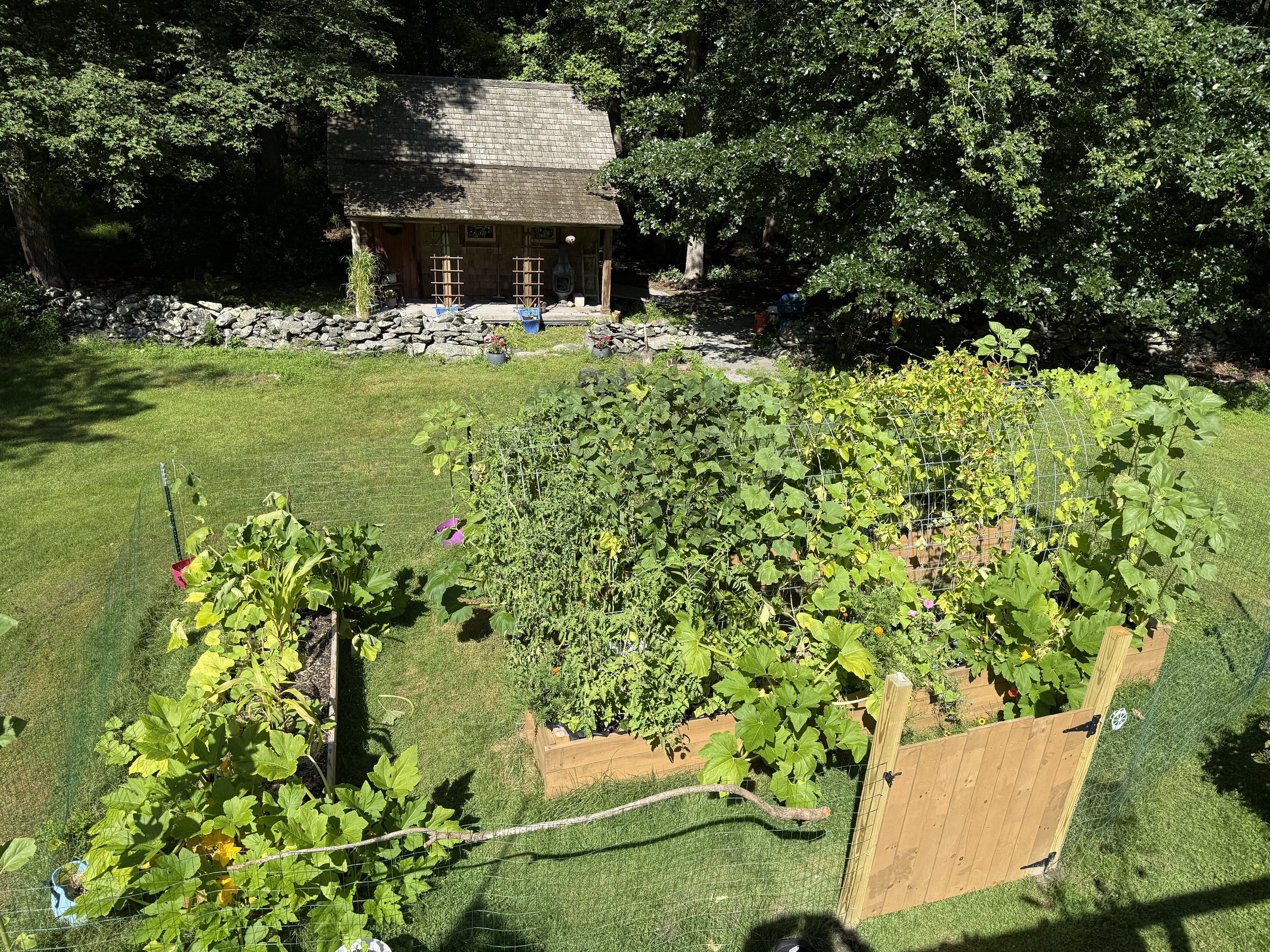
The Trellis at the end of July 2026
Want to see the trellis in person? Book the Garden Gate Experience and come walk it yourself. 👉 Book Your Visit →
Have questions about building your own cattle panel trellis? Send me a note →
— Wendy Farmer, SeedEO
America Way Seed & Soil Co., Jamestown, Rhode Island - Where the future takes root. 🌿
The Intelligence of the Edges
The land knows what it is doing. It manages and heals itself, we only need to pay attention and learn the way.
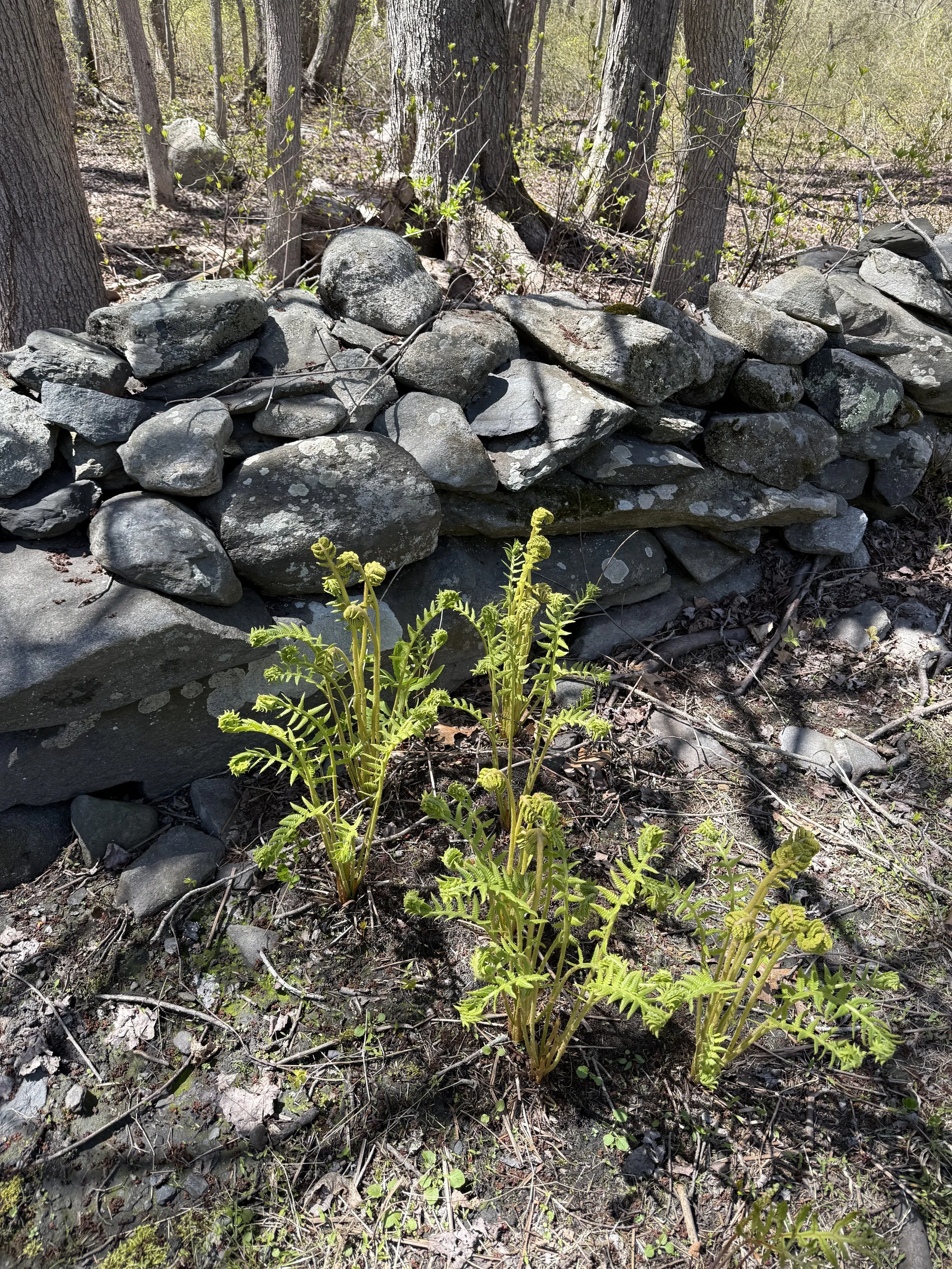
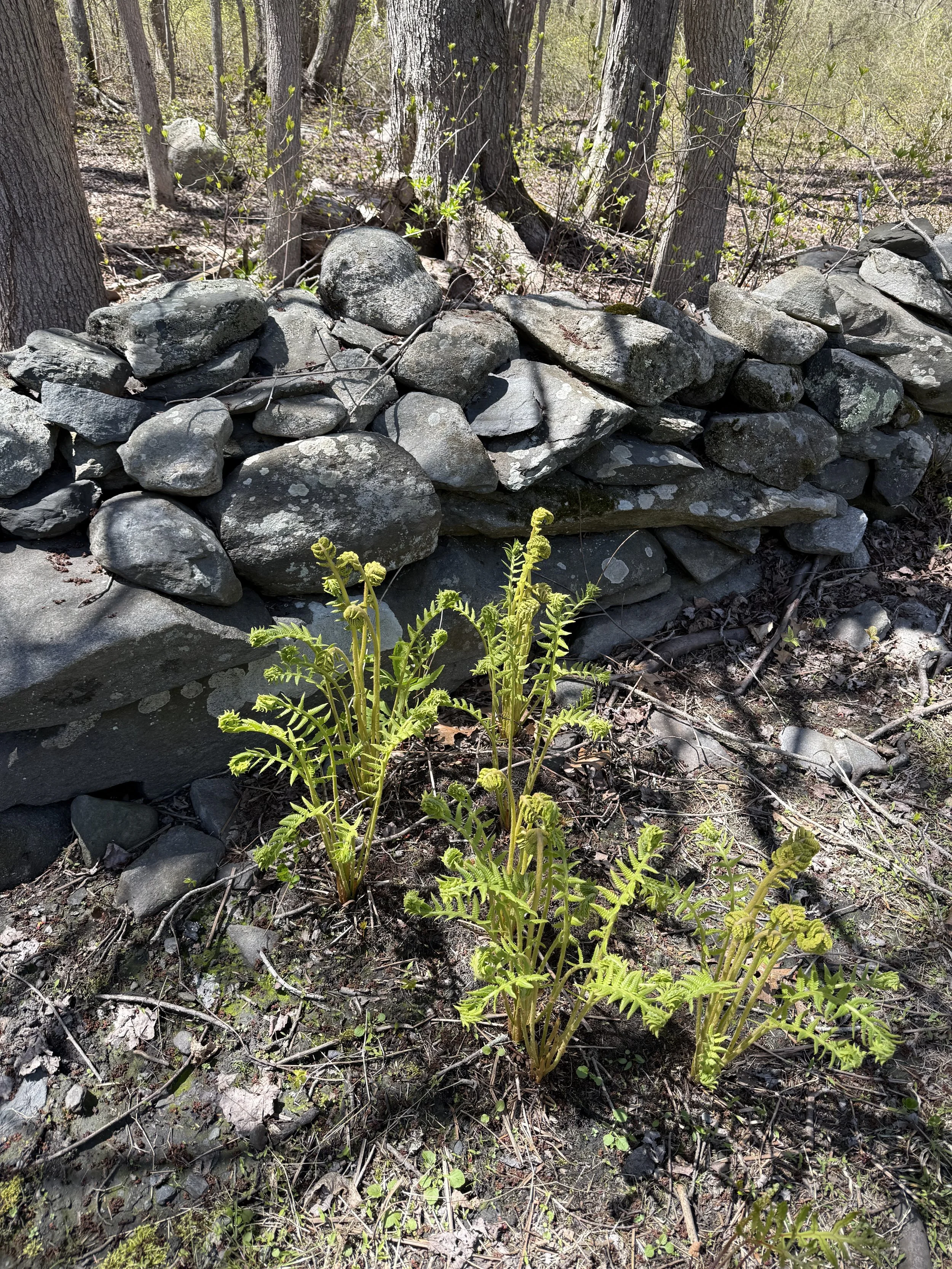
A fern fiddlehead unfurling in a Fibonacci spiral at America Way Seed & Soil Co.— one of nature's most elegant patterns, and a reminder that the land already knows what it's doing.
We don’t always notice the most important work happening on the land because it’s happening automatically.
Ferns are a perfect example. They grow where the soil needs stabilizing. Where water needs regulating. Where ecosystems meet and need to be gently stitched together.
At Seed & Soil, we pay attention to these signals. Ferns are not weeds. They are indicators. They tell us the land is healing itself.
Ecologically, they:
protect soil from erosion
filter and cleanse runoff
create cooler, moister microclimates
support microbial life and biodiversity
mark healthy transitions between ecosystems
They do their work without force, noise or intervention. This is the kind of agriculture we believe in. Land that knows what it’s doing. Systems that self-organize. Growth that happens in relationship, not extraction.
The image of a fern fiddlehead unfurling in a Fibonacci spiral is not a metaphor we invented, it’s a law of nature. Life grows in patterns that are efficient, elegant, and regenerative when we let it.
At America Way Seed & Soil, we work with that intelligence, not against it.
We observe first. We listen second. We act only when we understand. Because the land already knows how to heal.
Our job is to stop interrupting it.
Have you noticed ferns or other "edge plants" growing on your land? We'd love to hear what you're observing. Drop us a note at the Contact page or tag us on Instagram.
Growing Protein & Possibility
In 2020, I started container gardening on a porch. What began as a simple experiment became a deep question: how do we grow the most nourishing food in the smallest space possible? This is where that question has taken me.
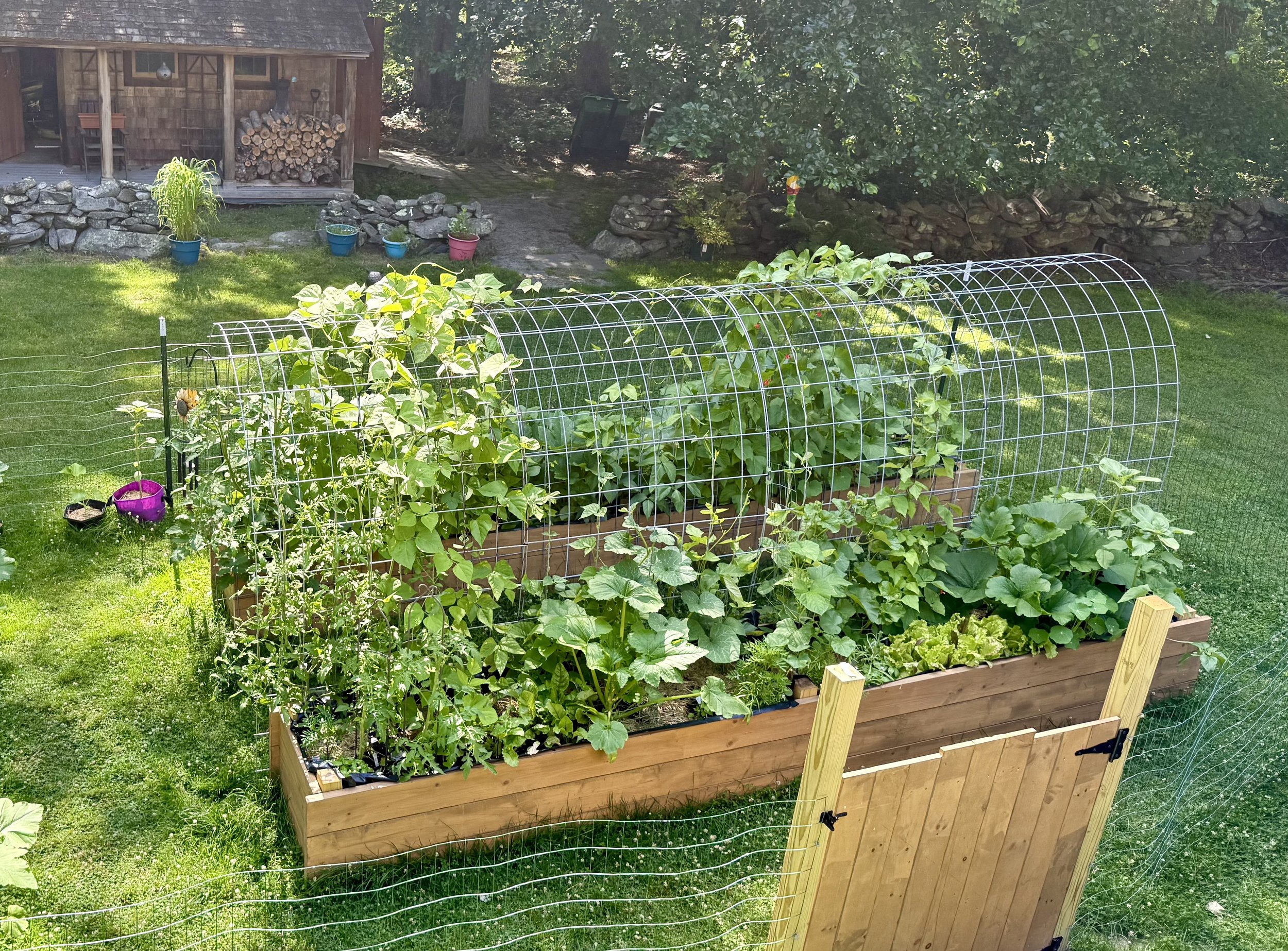
Our vertical grow “tunnel” garden we are building in 2026 using five 16’x4’ cattle panels. We are focusing on Skyscraper & Mammoth variety Sunflowers (to feed the birds & squirrels), a varieties of Pole Beans (I think there are 10 different kinds!), a variety of tomato called Brad’s Atomic Grape, and Luffa Gourds (because Christmas Gifts;-). PHOTO UPDATE: This picture was taken on June 27, 2026…its starting!
In 2020, I started container gardening on my porch. What began as a simple experiment quickly became something much bigger. I discovered I had a natural instinct for growing, and before long, people were stopping by, amazed at the size, beauty, and abundance coming out of such a small space.
Since then, I’ve been experimenting, learning, observing, and dreaming. One question continues to guide my curiosity and my work:
How can we grow the most protein- and nutrient-rich food in the smallest space possible?
This question comes from both hope and concern.
I am increasingly aware of how fragile our food systems have become. The widespread use of pesticides, the heavy reliance on processed and fast foods, and the growing disconnect between people and the origins of their meals all signal that our foodways need strengthening. While I do not have children of my own, I care deeply about what we are feeding the youth of today, both physically and emotionally. Food is a baseline connection for building community, culture, and health.
I believe one of the most powerful ways to strengthen our future is by helping young people, families, and communities reconnect to the earth and the living systems that sustain us.
🌻 Growing Up Instead of Out
My experiments led me toward vertical growing and companion planting to identify natural strategies that allow small spaces to produce meaningful nourishment. One of my favorite examples is the partnership between sunflowers and pole beans.
Sunflowers grow tall and sturdy, reaching toward the sun while creating natural structure. Pole beans climb those living towers, producing protein-rich food while adding nutrients back into the soil. Together, they demonstrate how nature thrives through partnership rather than competition.
Even in a single container or a square foot of soil, this pairing can provide:
• Nutrient-dense food
• Plant-based protein
• Seeds that can be dried and saved for future seasons - to eat or to plant
This is a living example of regenerative growing cycles and food production. It is food resilience, education, opportunity and empowerment growing side by side.
🪱 The Invisible Life Beneath Our Feet
Healthy food begins with healthy soil. Though I am relatively new to it, I have a thriving worm farm which wants to expand. I am actively learning about soil regeneration, particularly through worm composting and natural soil-building methods. When we nourish the microbial life beneath the surface, plants grow stronger, more resilient, and more nutrient-dense.
Soil is often overlooked, yet it is one of the most important teachers we have. It reminds us that growth begins in places we cannot always see.
🌱 Growing Food, Growing Confidence, Growing Community
One of the most beautiful discoveries in my growing journey has been witnessing how people respond when they successfully grow even a small portion of their own food. Confidence blooms. Curiosity expands. People begin asking new questions about where their food comes from and how they can care for the land around them.
Growing food in small spaces helps remove barriers. It allows people to participate in stewardship regardless of yard size, income level, or gardening experience. It reminds us that nourishment and self-reliance do not require acres of land. All they require curiosity, intention, and access to simple, replicable systems.
🌼 Why This Matters Now
We live in a time when reconnecting to natural systems is essential. When communities know how to grow even a portion of their own nourishment, they become more resilient, more connected, and more hopeful. Healthy, fresh nutrient-rich food is just plain better for you.
At America Way Seed & Soil Co., my goal is to continue prototyping and sharing growing systems that are approachable, productive, and easy to replicate. I want to help demonstrate that powerful nourishment can grow in small spaces, and that when people grow together, communities grow stronger.
🌻 An Invitation
If you have ever wondered whether you could grow food where you live, I encourage you to start small. A container. A pot. A single pairing of plants. Small gardens can grow the big change. Experience the magic of nature!
Ready to start small?
Browse our seeds → Book the Garden Gate Experience → Join the newsletter →